Leadership Journey

Interviews of leaders in influential positions where they talk about their journey and how they got where they are today.

  • Kindred Motes – “I’ve had to work on reining in my natural instinct to avoid burning out!”

    This interview is part of a new series where leaders in influential positions share their leadership journey – how they got to where they are today. I believe we all have a lot to learn from our stories of where we started, our successes and struggles, and important lessons learned on the way.

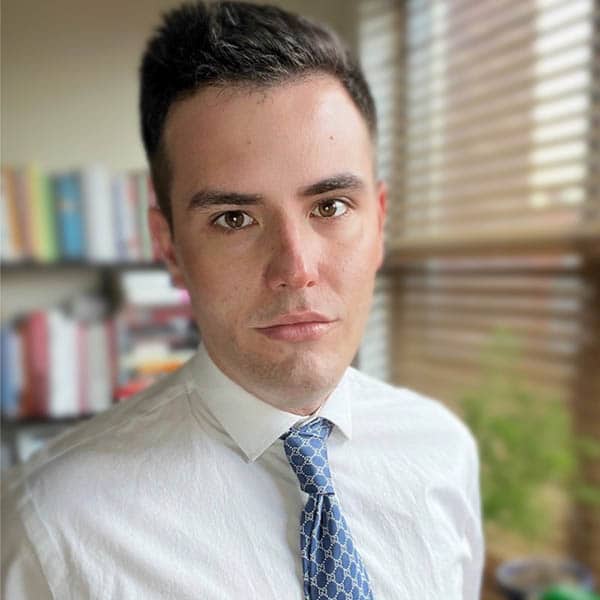
    This interview is with Kindred Motes. He has more than a decade of communications, social impact, philanthropic, and digital strategy experience, including impact campaigns for or in collaboration with some of the most prominent names in the social justice, technology, policy, and philanthropic sectors. He is the founder and managing director at KMSG, which is a boutique strategy, social impact, management, and communications consulting firm. You can find Kindred on LinkedIn here.

    KMSG leadership brings more than a decade of communications, social impact, philanthropic, management, and digital strategy experience to its practice, including impact campaigns for or in collaboration with some of the most prominent names in the social justice, technology, policy, and philanthropic sectors: The United Nations, The Obama White House, USAID, ACLU, Global Citizen, Netflix, Participant Media, Amnesty International, Oxfam, Google, the John D. and Catherine T. MacArthur Foundation, Southern Poverty Law Center (SPLC), Vera Institute of Justice, the Foundation for Louisiana, Wallace Global Fund, and New America, among others. 

    1. What do you like about the work you do? What do you find most challenging?

    Being a social impact, advocacy, and communications strategy consultant who works with various clients across sectors is really interesting because it forces me to constantly immerse myself in many different issues simultaneously. A typical day for me (though there really are none!) can involve a lot of things, but here are some of the most common: advising clients about trends in philanthropy; creating an engagement strategy for reaching high net worth individuals; designing a campaign to bring elected officials, influencers, activists, and policy experts together as part of a live event; running infrastructural or peer analysis projects and then designing a new organizational or team structure; building an audience growth strategy for Twitter and monitoring its success; and creating Google Ads campaigns to drive client referrals, fight mis- and disinformation, or build support for a cause through SEO. 
    And just as the services and tasks are diverse, the issues are, too – from vaccine equity and medicines access to ending extreme poverty, fighting hate and extremism, supporting local communities of color and building resiliency through community-based philanthropy, empowering women and girls worldwide, and building a pipeline of tech professionals in the private sector and government who are trained to put people before profits. It’s an amazing, amazing way to learn about different areas while driving strategies that I’ve already shown are fit for purpose through prior and existing projects.   

    The beauty of the work – its diversity, scale, and scope – is also what makes it the most challenging, particularly from a small business perspective. I’ve had to become really diligent about my time, my energy, and being realistic about what is feasible and what isn’t, and when I either need to pass on a project or bring on additional support to make it happen. It’s a really fortunate situation to be in – a good problem to have, as the saying goes – but it’s really important to me that the people I work with are pleased by our collaboration, because I think your reputation is really one of the few things that you have as a small business owner. That matters to me. 

    I’ve had to work on reining in my natural instinct, which is to get excited and say yes to a project just because the organization’s mission or vision aligns with mine without first considering my own likelihood of burning out from continual 16 hour days. Thankfully, that’s not the case anymore!

    2. What are you passionate about? 

    I care a lot about making sure that people understand the messages and calls to action that are important or essential to realizing a better world, and that’s what initially drew me to the world of communications and then took me into strategy, social impact, partnerships, and investment theories. 

    Reading is a lifelong love, and I travelled through books long before I ever set foot on a plane or went to another state, region, or country. I’m passionate about understanding the state of the world, so a lot of my time is spent listening to podcasts or audiobooks while taking long walks. 

    I’m passionate about leisure, too, including tennis, baking, cooking, and hosting dinner parties for friends on a large scale (once that is possible again!). But I’m most passionate about learning new things, having discussions about issues I don’t understand with people who do, and/or getting into discussions with people who feel differently about something than I do. 

    I love travelling and hope to better figure out how to do so in a way that feels healthy both for me and for the places and communities I visit. I’m passionate about building a community of social impact professionals who want to take issues of access, equity, justice, sustainability, and empowerment to the broader world through innovative campaigns, messaging, events, and collaborations. And I’m passionate about creating a workplace and company that respects and values both its clients and its staff and sets a tone that is aligned with the nature of the work we’re trying to do. 

    3. How do you manage pressure, stress, and fight the risk of burnout?

    Burnout is something I think a lot about. I worked anywhere from 50-80 hours per week last year on average because I was in startup mode, and had to do client work while also managing every element of the business – from accounting, business development, web design, marketing, legal outreach, LLC registration outreach, tax payments, etc. – completely alone. 

    I wanted to learn the fundamentals myself, but I also just didn’t know if it would last, so I didn’t want to spend a fortune outsourcing those things. It was incredible, exciting work, and I’m so grateful to have been able to have the experience and learn everything that I did,  but once I had some time off at the end of the year around the holidays, I slept for entire days and realized that my body was really telling me to slow down. 

    So this year, KMSG is implementing a 4 day workweek and requiring any current or future staff or contractors to make time for their own rest, relaxation, and creativity by asking them to take a minimum of four weeks per year in paid time off. I wrote about why in a piece on our site. 

    I was a bit nervous at first that clients would respond negatively or find it difficult to work around, but everyone has been very supportive – which also underscores for me why it’s so important to have alignment between organizational missions and personal values when choosing who to work with. 

    This trend of reducing workweeks to match the modern world, not the Fordian factory floor era, is finally starting to catch on, and I think the pandemic has shown that flexibility can be and must be a key part of office and workplace strategy and adaptation moving forward. As a manager, and a business owner, I don’t care where in the world you get the work done or what time you’re working on it as long as you’re communicative, responsible, and hit your deadlines. 

    Stress and anxiety are something that are a bit more persistent, especially for people who work in social impact, social justice, human rights, and/or advocacy campaigning. Everyone I know who works in this space is either burned out, jaded, hopeless, nihilistic, or some combination of them at one point or another. 

    My fiancé tells me all the time that my perspective of the world and my own sense of how things are going is far too shaped by the things I read daily to keep up with work, my political podcast consumption, and discussions on Twitter. He’s probably right, but I can’t become irrelevant in my own sector for the sake of optimism, so I’ve had to develop other strategies to mitigate that stress. 

    Walks, for me, are essential to my own emotional, mental, and physical health. As anyone who knows me can attest, it is not unusual for me to walk 8-12 miles on any given day with good weather (and when I have time in my schedule). Fall and winter make that tough, especially this year because I was travelling most of the fall in Europe for client work at the G20, COP26, and a few other events, which left little time for much else. 

    But if I’ve had a stressful day, I’ve realized that, for me, time with my fiancé or close friends is restorative, long walks listening to audiobooks or podcasts can help me reset, cooking dinner myself is calming, and a nice cup of tea can fix almost everything. Long weekend trips with friends or my partner are restorative, and I still enjoy an old-fashioned phone call.

    4. Who has had the most influence on your leadership? What have they taught you?

    Honestly, there are way too many people to mention here, and I’m getting anxious just thinking about it. So many people influence and inspire me. But if I had to give a shortlist and give brief lessons that each gave me, I’d start here:

    My parents: They are both incredibly hard workers who always stressed the power and importance of accountability, humility, and admitting when you don’t know something – and then working to figure out the answer to it. There’s nothing wrong with not knowing something; we should normalize admitting that we don’t know things because most people are faking it at one point or another and that lack of honesty can be really harmful to teams, communities, and society at large. 

    My parents inspired my own entrepreneurial spirit from watching theirs, and one of the biggest things they told me that has stuck with me is that time is the ultimate judge of something. Time will show whether you were right, even if it isn’t clear to someone at the moment. There have been times when I felt like someone else in a work setting did something unjust, or cruel, or harmful, and I wanted to push back or make a different case or prove to them and others that they were wrong. 

    But, most of the time, my parents’ words always helped me pull myself back and realize that my job was to keep my head down, do good work, and let the results speak for themselves. Time will tell. And in virtually every case, it did. That thinking is kind of radical these days, and that’s why I think it has so much power. It can really allow you to distance yourself from toxicity in a way that isn’t just avoidance. 

    Mary Crowley: One of the best bosses I’ve ever had. She encouraged creativity and individual thinking, advocated for her teams to get what they needed, and never saw the growth or success of a team member as anything other than something to be celebrated and steered in a direction of mentorship. She trusted my expertise, asked questions, and made me feel like I was actually leading something, not just being told what to execute on. 

    She also gave credit to her team rather than keeping it to herself, which showed a level of investment that was entirely to her credit. In my experience, too many managers are afraid of letting their direct reports shine, excel, grow, or try new things – I guess because they need control, are afraid of their team’s long-term intentions, or maybe just insecure in their own leadership. It’s probably some combination of those things. 

    But Mary showed me that it was possible to be successful, driven, ambitious, and influential while also being kind, empathetic, empowering, and humble. It’s a mix I try (and fail) to emulate every day, but any successes in my own management, past, current, or future, are due in no small part to Mary. I’m so honored to have benefited from her support and encouragement and am grateful to call her both a mentor and friend to this day.  

    Paula Januzzi-Godfrey: Paula was my boss and mentor during my time in the Episcopal Service Corps, and inspired me early on, at a young age, to think of success in a role as being about more than a title or money – because, as a stipend-based fellow, I didn’t really have either of those things! She brought such positive energy, joy, and love into her work, and affirmed my desire to try new things and learn from them. Some of the days we spent working together are among my happiest memories from that time in my life. 

    Anna Hall: One of my most inspiring colleagues. Anna taught me to dream big, plan big, make big asks, and then do everything you can to turn them into successes. I met Anna early on in my time living in New York, and to me, she came to represent everything about the kind of career I wanted to have. 

    She was the first in-house consultant I’d ever worked directly with, and I was so inspired by our conversations about negotiations, strategy, client outreach, event planning, influencer outreach, and every one of the many jars Anna had her hands in. She was the first person I met who made it seem realistic for me to someday try and pivot to a big, bold career in social impact, social responsibility, sustainability, and public engagement strategies. She made it real because she made it visible and accessible. I’ve learned so much from her and am so proud that we have kept in touch as friends.  

    5. What are your goals or aspirations for this year?

    I’ve been really fortunate to have gotten to work with some amazing clients since starting my practice, and I’m really excited to continue working with many of them this year on issues of equity, impact, and justice. I’d like to do more work around sustainability and impact investing, and am excited that I’ll soon be announcing a partnership with one of the leaders in that space. 

    On the business front, I’m working with some close friends, advisors, and former colleagues to think about what it would look like to scale up KMSG and really hone in on particular needs within my client base to assess why they’ve found so much value in our work together and how I can replicate that in a way that doesn’t compromise on the fundamentals. I’ve been in conversation with a few other amazing professionals I’ve worked within the past who are interested in branching into this work, so I hope 2022 is the year that KMSG can take the things that made last year so successful and build on them to create an even stronger foundation for long-term success. 

    On a personal level, I’m building in time to recharge, rest, think, and ideate. I think too many people prioritize productivity at the expense of giving themselves time to experience true creativity. If you’re never free to let your mind rest or wander, your creative juices can deplete. In my field, that’s a major liability, because creativity is the majority of the job requirement! And yet, I think depleting creativity by working too much is sadly way too common in my field. 

    So I’m aiming to have more time to myself and with friends and loved ones that are not tied to some pseudo-restful, productivity-driven activity. Anything tied to a goal, professional development, financial wellbeing, intellectual advancement, etc. doesn’t count as leisure. That’s my new rule. There’s time for those, too, and I definitely love and plan to do them (from business podcasts on a walk to professional development certifications or taking a language course), but I’m trying to reframe how I think about rest and leisure to remove achievement metrics from that time. 

    I’m also getting married in October, which makes me incredibly happy. I can’t wait. 
  • Mark Horoszowski – “Leadership takes a lot of practice, introspection, and training!”

    This interview is part of a new series where leaders in influential positions share their leadership journey – how they got to where they are today. I believe we all have a lot to learn from our stories of where we started, our successes and struggles, and important lessons learned on the way.

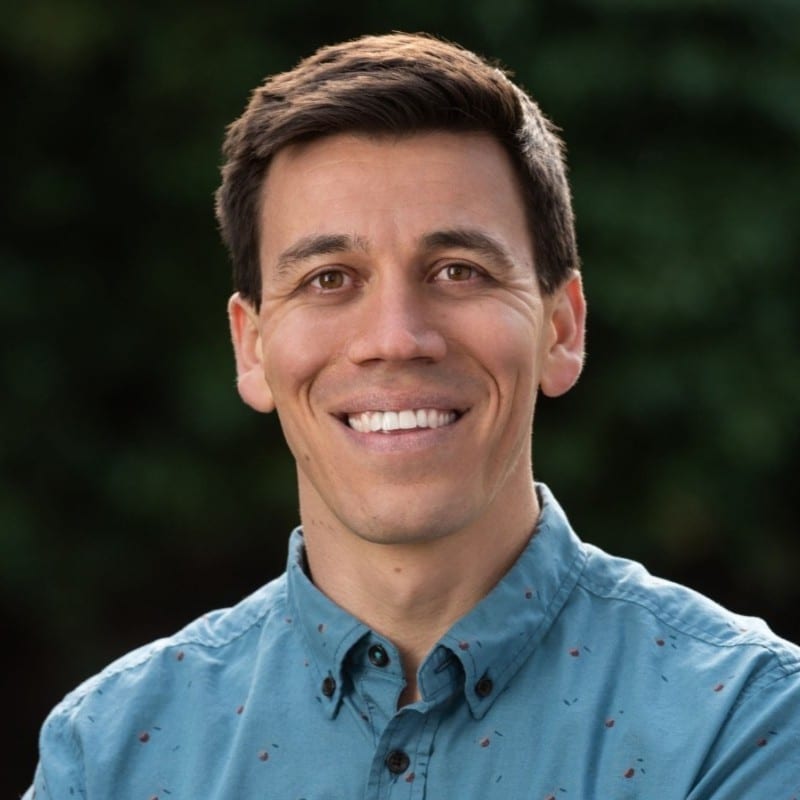
    This interview is with Mark Horoszowski. He is the CEO and co-founder of MovingWorlds – which is an award-winning social enterprise that helps individuals scale world-changing ideas. He is also an adjunct faculty and lecturer at the University of Washington on Corporate Social Responsibility, and a fellow at the RSA. He also contributes to Huffington Post Impact and serves on the American Cancer Society’s National Relay For Life Leadership Team. You can find Mark on LinkedIn here.

    Share your backstory and how you got where you are today. Can you share one or two events (positive or negative) in life that shaped who you are as a person and leader?

    My parents immigrated to the states from Slovenia and Poland with next to nothing, so we’re used to simultaneously helping those in need and receiving help in return. With that volunteering gene firmly ingrained, I went on to join the Boy Scouts. In college, I volunteered with The American Cancer Society’s Relay for Life program and even helped start one at his school.

    I ended up accepting a position with a prestigious accounting firm but quickly discovered something strange: Though my volunteer work helped me land the job, they didn’t want me to continue it once I was part of the company. In 2010, I packed my bags and set out on a yearlong journey around the world that would change my life. As the journey was coming to an end, I met my soon-to-be co-founder, Derek Norde.

    What do you like about the work you do? What do you find most challenging?

    What I like most is learning so much about a wide variety of topics AND that this learning is being directly applied to solve the most pressing challenges of our time.

    In my role, I have the level of intellectual stimulation that energizes me every day, I get to work with a wonderful team from around the world, and with the knowledge that our work is creating meaningful impact.

    What are you passionate about? (or what dreams keep you up at night?)

    Fairness. I believe that people everywhere should be able to live without environmental, financial and social stress and inequities. Creating a fair and sustainable planet means we need to tackle the biggest system challenges of our time, and I’m passionate about using my time and skills to do that.

    How do you manage pressure and overwhelm?

    This continues to evolve for me as I learn more about myself, my body, and my relationships with others. A common theme is to engage in an activity that enables me to be physically active, but in a way that lets my mind wander and approach the issue from different perspectives – long-distance trail running, hiking, backcountry skiing, and cross-country skiing tend to be my go-to activities for this.

    Who has had the most influence on your leadership? Share a story to illustrate your point.

    I can’t think of one person. Leadership is a challenging skill that takes a lot of practice, introspection, and training. I have many people that I look to for inspiration – Sachi Shenoy who founded Upaya Social Ventures because of her commitment and dedication to solving that hardest funding gap that exists for businesses. Jacqueline Novogratz for her steadfast commitment to morals and principles.

    And while unpopular in the social impact space, Jeff Bezos for his singular focus on doing the right thing for customers and sticking to his audacious strategy for over such a long duration of time. On a more personal note, my parents both model quiet, community-based giving with an emphasis on staying principles and doing the right thing for others.

    What are your goals or aspirations for this year?

    MovingWorlds is growing our revenues, team, and impact. Growth stages are exciting for social enterprises because of the potential for impact, but scaling also creates real operational challenges. My goal is to keep building a better team and improving our culture as we grow so that we remain an award-winning employer.

  • Penelope. – “I have learnt to not agree to deadlines imposed upon me, rather negotiate and arrive at a mutually agreeable timescale”

    This interview is part of a new series where leaders in influential positions share their leadership journey – how they got to where they are today. I believe we all have a lot to learn from our stories of where we started, our successes and struggles, and important lessons learned on the way.

    This interview is with Penelope. She is the Founder & Director of Stimulus, a company that is committed to stimulating change and growth in individuals and organisations. She is passionate about empowering women, especially women from Black & Ethnic Minority backgrounds.

    She has 17 years of experience in the Private and Social sectors working with organisations like Accenture IT Infrastructure Outsourcing, ADT Fire & Security UK&I and Lancashire Women. She is Chair of the Board of Trustees at Humraaz, a Clore Social Leadership fellow, an Animas accredited Transformational Coach and a member of The Chartered Quality Institute. You can find Penelope on LinkedIn here.

    Share your backstory and how you got where you are today. Can you share one or two events (positive or negative) in life that shaped who you are as a person and leader?

    I come from a working-class Anglo Indian family who lived paycheck to paycheck. I had a chaotic childhood with limited choices. Being a woman, living in India with no adult male in the family was challenging and restrictive. Despite our circumstances,  my mother always had what felt like fanciful aspirations for me. I think this actually helped me dream a little bit bigger.

    I experienced various kinds of abuse, which I learnt to cope with and compartmentalise from a young age. Surviving all of that made me believe that I had a greater destiny and purpose to fulfil. Why else would I have survived? This was crucial in helping me push past obstacles and to keep moving forward. 

    I started off training as a nurse, then worked in a call centre and then moved to an  IT company, developed a passion and a career in quality management.

    In my late 20s, I was certified in Six Sigma Green Belt, ISO 20k Internal Auditor and ITIL v2. Prior to this I only had a nursing diploma. These certifications opened doors for me and I worked hard at being a specialist in my area of work. Soon I was designing the quality function and managing a team that later grew to the Asia Pacific region.

    The biggest lesson I learnt was that through education and hard work one can positively change one’s circumstances. It meant I was financially independent and that changed my life manifold. More importantly, I was respected and valued for the knowledge and experience I had.

    What do you like about the work you do? What do you find most challenging?

    I love that I am able to use my experiences, my journey to inspire other ordinary women like me. I am a nobody from nowhere, that’s how I always describe myself. I have no connections, no contacts, no family money, no paths paved for me to follow. In fact, my ancestors were kept anonymous i.e. no public records because of the stigma of being mixed race.

    When I work with people, especially everyday women like me, irrespective of their circumstances  I see in them the future person they want to be and I want to help them get there.

    What are you passionate about? (or what dreams keep you up at night?)

    It’s taken me a lot of trial and error to get to where I am. While I cannot change people’s destiny, I am passionate about being the person that stimulates their desire to achieve their dreams, to utilise the resources they already possess. Sometimes all they need is a champion in their corner so that they don’t have to face it alone.

    I have a strong sense of fairness and cannot abide by anything that shifts power in favour of one person, one group to another. On occasion, this has been to the detriment of professional opportunities and relationships but I certainly sleep better knowing I’m being true to what I believe in.

    How do you manage pressure and overwhelm?

    I believe in designing and planning in detail, setting realistic timescales and expectations. I believe in working smart rather than being a slave to the 9-5. Working when I need to and giving myself permission to have planned and unplanned downtime by listening to what my mind and body is telling me. 

    Here’s what I know  –

    • By sharing and delegating work, giving other team members the opportunity to try new work and to upskill helps share the workload while developing a team that is cross-skilled and collaborative.
    • I have learnt to not agree to deadlines imposed upon me, rather negotiate and arrive at a mutually agreeable timescale. 
    • Having the right tools is key to managing your work. 
    • When working on large and complex projects I chunk work using the Pomodoro technique, a time management system. 
    • Communicating with all stakeholders is crucial.
    • Doing a simple grounding exercise at my desk helps calm my mind, as does a quick walk.
    • It’s important to remain pragmatic when approaching work, when it becomes emotive it will become overwhelming.
    • Developing a growth mindset has changed how I approach everything. For there is no failure, only learning opportunities.

    None of this is easy, but I know this – the more you practice it, the easier it gets.

    Who has had the most influence on your leadership? Share a story to illustrate your point.

    My coach has had the most influence on my leadership. As I said early I believed I was destined for greater things, but I have no idea about the how, what, when, etc.

    As part of a leadership programme I was on, I was offered 4 coaching sessions. The first time I spoke to my coach, it felt like the conversation I was waiting to have my whole life. She just accepted me for who I was. When she asked me what I was committed to and why. I was able to articulate what I’ve been thinking about for so long into a coherent commitment statement.

    During that first conversation, I was excited, shy, embarrassed, passionate and hopeful. Every time I sounded doubtful and said, “No one will listen to me”, “I am a nobody”, “I have nothing to contribute” and all those limiting beliefs that surfaced, she asked me for the evidence that made these statements true. I did not have any. 

    One of the quality principles is evidence-based decision making, while I applied it at work, I now needed to apply it to my life. That was a turning point in believing in myself. As a coach and trainer, when my clients express limiting beliefs, I ask them this simple question, “What’s the evidence?”.

    What are your goals or aspirations for this year?

    I am committed to running my residential retreat “Still I Rise” at least once a year. I want to continue developing my company Stimulus because I believe in what I have to offer and even more so that my success will continue to be of inspiration to women like me. And the women it inspires, I want to be able to support them on their journeys. There are very few relatable role models for women who come from nothing, who work hard in silence, who are constantly overcoming many barriers and have to fight for their dreams to see the light of day, should they dare to dream. 

  • Erno Hannink – “I understand that I can only control how I respond to things”

    This interview is part of a new series where leaders in influential positions share their leadership journey – how they got to where they are today. I believe we all have a lot to learn from our stories of where we started, our successes and struggles, and important lessons learned on the way.

    This interview is with Erno Hannink. He helps entrepreneurs to accomplish their goals on time. He is a business coach, the independent external sparring and accountability partner for innovation in your company. He is a referee with KNVB, runs on plants, and says he is a stoic. He is also a podcast host of the Erno Hannink Show and The Entrepreneurs Bookcast. You can find Erno on LinkedIn here.

    Share your backstory and how you got where you are today. Can you share one or two events (positive or negative) in life that shaped who you are as a person and leader?

    How did I get to where I am today? At the age of 53, I have just gotten a clear picture of what the meaning of my life is. Maybe I am just at the beginning of my life, we will see. It is easy to look back and find the red thread in your life, but making long-term decisions that will have a big impact on your future is difficult. Sometimes this turned out a lot better than I expected and sometimes a lot worse. 

    A few moments in my life that I am grateful for today are my exec-MBA study, spending time with my children, the trip to Las Vegas, and starting a podcast. 

    During the executive MBA, I have learned to be curious, research, and share my findings. I still use this today in my blog, in the coaching, and for my podcast.

    One of the activities with my kids when they were younger was being an assistant referee at their soccer matches. Today this means that I am a referee on Sunday for the KNVB, which keeps me fit and gives me the confidence to speak up, I go watch games of my daughter and visit games of BVB with my son.

    The trip to CES in Las Vegas was a dream that I had for a long time. A project in 2008/2009 gave me the opportunity to do this. It resulted in meeting friends that I knew from social media. The trip was also the start of co-organizing the Social Media Club in the Netherlands and the first Dutch WordCamp. It also was the spark for my first published book and many more to follow.

    Starting my podcast in 2015 was out of curiosity and it resulted in more than 300 conversations with entrepreneurs. Through the interviews, I learned to listen and ask better questions. Today I see this as an important part of the foundation of my business coaching.

    What do you like about the work you do? What do you find most challenging?

    The coaching of entrepreneurs is just great. Learning what they want to accomplish, finding the goals and tactics to get better results. Using what I have learned over the years to sharpen the ideas of the entrepreneur and ask tough questions. Being a sparring partner and having great conversations is what I like to do. Most challenging for me in this work is attracting more good entrepreneurs that want coaching.

    What are you passionate about? (or what dreams keep you up at night?)

    Social and ecological inequality is what keeps me up at night. Why do we ruin the planet just to make cheaper products and strive for more profit? I don’t understand why we underpay women and minorities all over the world and let other people work in circumstances that we would not do, just for a cheaper product so we can buy more. In the Western world, we already have so much.

    How do you manage pressure and overwhelm?

    To manage pressure and overwhelm I use a number of stoic tactics on a daily basis. 

    • Journal
    • Write down 10 things that I am grateful for.
    • Understand that I can only control how I respond to things.
    • Improve my wisdom, courage, justice, and temperance by 1% every day.

    To remove the noise:

    • My day starts with writing down a list of 3 goals that I want to accomplish today. When I work on one of the goals I focus just on that goal.
    • No notifications from apps on my phone, tablet, or computer. My phone is most of the time set to silent.
    • I don’t read newspapers, listen, or watch the news.

    Who has had the most influence on your leadership? Share a story to illustrate your point.

    Pieter van Osch had the most influence on my leadership. We are good friends, and we were in a study program in 2010 and a mastermind for 10 years together, we visited events together, he was my daily buddy for a few years, we take long walks every year and brainstorm. Today we are working together to bring the Rhineland way of working back to Dutch companies. He is a great trainer that doesn’t want to coach. I am a good business coach that doesn’t want to train. I have learned a lot from Pieter and love working with him.

    What are your goals or aspirations for this year?

    My goal for the coming year is to follow the process, like last year. Get 7-8 hours of sleep, get up early, read at least one page in a book, write and publish an article, run four times per week, interview entrepreneurs for my weekly podcast, publish a newsletter each month, publish a pocketbook each quarter, and coach entrepreneurs. For 2022 I have one extra goal, publish a book on impact decision making for entrepreneurs.

    I do all this in order to increase awareness of social and ecological inequality and reduce it together with entrepreneurs.

  • Noah Miller – One plays how they practice!

    This interview is part of a new series where leaders in influential positions share their leadership journey – how they got to where they are today. I believe we all have a lot to learn from our stories of where we started, our successes and struggles, and important lessons learned on the way.

    This interview is with Noah Miller. Noah is the Co-Founder & Chief Strategist at Rho Impact. He says, “Systemic change is the ultimate team sport, and I consider myself a player-coach. Nothing gets me more fired up than joining a team of good people with even greater goals and stepping onto the field together. The world needs more teamwork. I am dedicated to making that happen”. You can find Noah on LinkedIn here.

    Share your backstory and how you got where you are today. Can you share one or two events (positive or negative) in life that shaped who you are as a person and leader?  

    I am a Co-Founder and Chief Strategist at Rho Impact. We combine ESG advisory and customizable software and technology tools to address the key barriers to ESG planning, tracking, and reporting.  I’m also the Founder and CEO of Calibrate Partners. We are a “no BS” network of boutique ESG firms that partner to support organizations around the world in adapting to the new normal of business.

    I began my career on the enterprise organizational development team at Vermont’s iconic Keurig-Green Mountain (GMCR), learning the art and science of making organizations more effective and their people more engaged. Since then, I’ve been an international social entrepreneur, professional athlete, army commander, sustainability director, OD director, ESG consultant, and entrepreneur.

    Two complimentary events have had a significant impact on who I am today as a person and leader. The first event… I moved to Israel to start a social venture that used sport as a community development mechanism for improving Israeli and Palestinian relations.  After several years of collaborating with the Palestinian community and civil society leaders, I was drafted into the Israel Defense Forces after the 2014 Gaza war. 

    These two events, from leading community development efforts to leading special forces soldiers, had a significant impact on who I am today and the work I do.

    What do you like about the work you do? What do you find most challenging?

    I like ESG work as I feel like it’s as close to G-d’s work as it comes.  Helping organizations engage and address world challenges, as well as transitioning their business model to operate in a net-zero economy, is good for business, society, and the world at large.

    The most challenging aspect of the work is that it is inherently complex, messy, and requires both the changing of hearts and minds as it does the changing of the business operations.

    What are you passionate about? (or what dreams keep you up at night?)

    Democratizing global access to impact expertise and tools, so that all organizations around the world are empowered to act, now.

    How do you manage pressure and overwhelm?

    After being a professional athlete and special forces soldier, I remember that one “plays how they practice.”  I manage pressure by being prepared, confident in my team, and not sweating the small stuff (as most things in life are small).

    Who has had the most influence on your leadership? Share a story to illustrate your point.

    When I was undergoing the special forces close combat commander course in the Israel Defense Forces, I was way out of my league.  Surrounded by native Israeli’s who had been serving in special forces units for several years, it was clear my battle was an uphill one. 

    After a poor performance in our evaluations (which occurred multiple times a day, every day) the leading officer of the course told me “leadership isn’t about what you say and do. Leadership is about how you make people feel.”  I have never forgotten that experience or that message since.

    What are your goals or aspirations for this year?

    Scale Rho Impact into a globally recognized leader in expanding access to impact expertise and tooling, and advancing ESG performance in organizations around the world.

  • Jay Richards – “I’m learning to rest and that I do not need to try and control everything!”

    This interview is part of a new series where leaders in influential positions share their leadership journey – how they got to where they are today. I believe we all have a lot to learn from our stories of where we started, our successes and struggles, and important lessons learned on the way.

    This interview is with Jay Richards. Jay is the CEO and Co-Founder at Imagen Insights. Imagen Insights enables brands to crowdsource qualitative and quantitative feedback, ideas and insights from their community of 10,000 Gen Z from 57 countries. This helps them to build their branding, marketing and/or products using insights gained via the Imagen Insights platform within 72 hours. You can find Jay on LinkedIn here.

    Share your backstory and how you got where you are today. Can you share one or two events (positive or negative) in life that shaped who you are as a person and leader?

    When I was in secondary school, I was good at being bad. I was always getting into trouble at school! Nonetheless, my business head and flair for entrepreneurial ideas were encouraging. That is what made me want to get a Business Studies degree, after which I started working in the City of London in Sales. 

    While working I wanted to do something with more purpose however, something to give back and to support current students. I initially started an incubator where I helped students fund business ideas. A few months later, I was contacted by the National Football League (NFL) who wanted to work with me to use my network with university and secondary school students to help them with marketing. We knew we would need something great to equip us for this scale of the project and as a result, my Co-Founder Cat Agostinho and I started Imagen Insights

    What do you like about the work you do? What do you find most challenging?

    I love the fact that every single day we’re providing young people with opportunities to shape their futures – that is so fulfilling.  We connect young people with brands to enable them to provide brutally honest feedback on their marketing and products and that can really make a difference to the worlds they grow up in. 

    I find switching off the most challenging. I’m getting better at this, but starting the business means I want to work on it all the time. I’m learning to rest and that I do not need to try and control everything. I have a great team working alongside me, I just have to be patient with myself and enjoy my evenings and weekends so I can stay healthy and at the top of my game.

    What are you passionate about? (or what dreams keep you up at night?)

    The unknown. It might sound strange but what excites me most (and keeps me awake sometimes) is what the future holds for me, for the business, and for our growth. It’s a super positive headspace to be in, to be excited about what is around the next corner as opposed to nervous about it. We’ve grown so quickly in such a short space of time and I’m proud of that.

    How do you manage pressure and overwhelm?

    It sounds simple but I keep my mind clear and healthy by regularly hitting the gym. I love Jiu-Jitsu as it gives me the headspace to concentrate on just this and to switch off from everything else – plus it’s such a disciplined sport – it keeps me cool and collected.

    I’m also a what’s next person, and so to maintain focus on tasks at hand and to cope with multiple spinning plates and deadlines, I put everything work-related on a Trello board. Our team can all view each other’s boards too and so it’s super helpful for keeping track of all the great work we’re doing.

    Who has had the most influence on your leadership?

    My leadership qualities are most inspired by a public speaker called Judah Smith. He just loves people and wants everyone to leave better off after meeting him. His energy is just electric and I’m drawn to that. I love that about people because it rebounds onto others; leaders or not, someone who lights up a room when they enter, that is how I always strive to come across and it’s served me quite well along the way. 

    What are your goals or aspirations for this year?

    We just want to keep doing what we’re doing and doing it well, helping to support the next generation.  To do this we want to carry on growing our community – we have nearly 10,000 consultants now in 57 countries around the world. And of course, we want to continue working with more amazing brands along the way!

  • Lisa May – “There’s a different way to lead and there’s a different way to serve!”

    This interview is part of a new series where leaders in influential positions share their leadership journey – how they got to where they are today. I believe we all have a lot to learn from our stories of where we started, our successes and struggles, and important lessons learned on the way.

    This interview is with Lisa May. She is the founder of Fülle – Holistic Leadership Development and her mission is to help busy executives maximize their fulfilment without sacrificing their success – or anything else that matters to them. You can find her on LinkedIn.

    Can you start by sharing your story and how you got where you are today? And if it helps, can you share one or two examples of events, whether positive or negative from your life that shaped where you are today? 

    So nice to be with you, first of all. And thank you for the invitation.

    So, I spent most of my career in the medical industry and the healthcare industry with Johnson and Johnson and had really amazing experiences throughout that journey. And I had a couple of specific things. Throughout my progression and through my evolution there are a few salient points that jump out.

    So I’ll just share a little bit of the background and then I’ll, I’ll hone in on those, those experiences that really were formative if you will. So I started, with Ethicon in 1999 and had a number of opportunities in sales, marketing, operations, lots of different things to observe and understand the business.

    And, and so that was wonderful, wonderful development as like, as a professional. And after about, you know, many, many years in that space, I was doing well, “achieving success”, if you will, in the external environment and the business and lots of promotions, lots of opportunities, all of which were good, but I really found it interesting that as I ascended in the hierarchy within the company, I started to feel worse within.

    And in 2008, I actually had a pivotal moment and a really clear message come through a clear download if you will. And I was leading a large team at this time in an amazing space. I was working in surgical obesity and helping patients with morbid obesity and was really inspiring work.

    And we were doing really well. The business was performing amazingly. I had very solid external relationships outside of work but yet I felt really empty inside. All the success critical to quality measures were being met, but I felt empty. And so this was really perplexing and I had a message come through that.

    It was that there’s a different way to live. There’s a different way to lead and there’s a different way to serve. And that was it. That was the message. And so I heard it and felt it loud and clear, but I didn’t really know what to do with it if you know what I mean. And so it took me some time, um, about 10 years of time or, you know, five, five to 10 years of time to assemble what that really meant.

    And it meant for me to understand myself. I had to study different philosophies. I had to explore some different modalities and methodologies so that I could put the pieces together in this puzzle. That was really me. And through that journey, I actually ended up leaving corporate so that I can serve from the other side in a holistic way.

    I started a development practice called Fulle and fulle of means abundance and fulfilment. And so it took quite some time. But what I realized is that I had become my achievements, my identity, and a lot of my worth and value as a human had been trained to be connected to milestones outcomes, performance. And that’s simply not true.

    We all know that, but I’ll pause. Those were some, some important moments for me. 

    Can you share a little bit more about those five to 10 years that it took to discover a different part of yourself?

    Yes. For sure.

    So I stayed for, for a portion, a good portion of that time. I stayed in the corporate realm actually until around 2014, but while I was still performing in the corporate space. My evenings and weekend time was spent studying. I went back for many certifications to pursue different thought leaders, different philosophers, different spiritual leaders.

    And so it was not one thing. It was many things. And I was intuitively called to fight and it helped me begin to deconstruct some of what had transpired. And I was able to observe myself in a different way and to use what helped me a lot with science-based tools and technologies, because coming from J and J, as you can imagine, it’s all founded in science and root cause.

    And what are the features and the benefits of that that add up to an effective product? So that was helpful for me. So it was everything from, like I said, spiritual guides to understanding neuroscience and how the brain and the body connect in states of chronic stress. And what happens over time when we subject ourselves to continuous stress in the body, which is what I had experienced and endured for probably 12 plus years in a row.

    And so it was just very helpful to deconstruct. 

    The story which you shared is something that I hear often from people I’ve worked with. As you talked about the spiritual, the philosophical, and the brain, what have you discovered in the context of leadership?

    Yeah. Great question. So what I’ve discovered is that there’s a different way to lead and what I mean by that there actually needs to be different constructs and companies that are quickly evolving the ones that are becoming leading companies of this next evolution.

    We are going to look at leadership differently. We’re not only going to reward the leaders that can deliver and execute. In chronic emergency situations under high pressure, under high stress, we will actually begin to form what I call evolutionary leaders that will be trained to not only deliver during an emergency and crisis situation but will also understand and embody the art of recovery. They truly allow their brain and their body to recalibrate and recover from the stressors and performance will actually go up. That’s how I see leadership tipping its scales.

    What do you like the most about the work that you currently do? 

    I love the work I do because every engagement is unique and every individual is unique.

    I love that the breadth of training that I’ve received and the knowledge that I’ve acquired enables me to serve in a very custom manner. Whatever the tools and resources we applied to the leaders’ needs, they end up better. And so this is such a co-creative and beautiful journey because the leaders that I work with, the leaders that find me and that we find each other are of a very like frequency and in a very like mindset.

    And it really is about the unlocking. And if we can get out of our own way to live, to lead, to serve better, we will do it. Not out of pain and suffering and out of pushing and driving through, but out of a place of deep, deep balance and inspiration. So that’s what I love the most. 

    In our society, there is an emphasis on hard work, of equating success with being busy. There is that narrative, which we live in. So given that and given everything which you shared earlier, what are the challenges you face in doing the work that you do today?

    I wouldn’t call them challenges. I think there are opportunities to shift our understanding. So with the leaders, like I said, that I’m able to support in the companies that I engage with to drive cultural shift are ready for this evolution they’re facing with open hearts and they’re really excited to shift.

    So I don’t see it as challenging. But the resistance is real. And what I mean by that is we’re trained in a particular way. For me personally, since 1999, when I entered the corporate realm all the way through to when I stepped off that train, it was a repeatable pattern. That the drive and the push were equated to success, as you just mentioned.

    And so overcoming those memorized states of being and those memorized neural pathways takes time. Not a lot of time, actually. It can be very, very efficient, but that’s the resistance because the body knows better. We’ve literally memorized a state of being and that if we’re not running Mach three to chase down and put out a fire, then we don’t feel alive or that we’re doing “good work”.

    That was the misbelief, the limiting belief that I had deeply stored in my system. So dance with it and opportunities will emerge and every, every leader has their own narrative. Every leader has different, you know, different minute chronicles of this same theme I find. And so that’s the opportunity for us to rewrite what success means.

    It doesn’t mean we’re not going to perform. That actually means we’re going to perform better because we won’t be trying to push and perform from a place of emptiness.

    We spoke about the past, but what is it that you see in the future that is the kind of work that we will all be doing? And what are you passionate about in creating that possibility? 

    I think the rewrite is underway and I think those of us like you and me and others that are serving in this space, That we can, we can help accelerate, not in a pushing manner, in an inviting manner that enables more balance and homeostasis where true leadership lives.

    Because I think we can agree that when we are shining our brightest lights and speaking our greatest and deepest truths, we’re most alive. And that’s what we need in leaders from the future. So leaders from the future will be able to demonstrate neuroplasticity, meaning that they’re going to be able to unwire and rewire quickly and easily with tools that are sustainable like we’re discussing.

    And that means unlearning some of the patterns and habits that have been formed over time. And so neuroplasticity is a key facet. In addition to resilience, these are the two core principles, the core foundations that will, I believe define leadership in the future and resilience is the ability to overcome stressors or changes in the environment with ease and allow the recovery process to occur and not just stay in high gear all the time.

    So neuro-plasticity and resilience are the keys to this. 

    How do you manage pressure and overwhelm yourself? Not just because of the resistance of the old patterns, but also because you want to create change and you are ambitious about the future.

    There’s a tendency to fall back into the same trap of doing more aiming for one milestone after the other. So what advice would you give for leaders who are ambitious and want to make a change, but yet at the same time, find a lot of pressure?

    Yeah. Great question. Really great question.

    And this is, this is the heart of it. If we can actually observe ourselves and recognize when we are going into patterns from the past, it’s all about the how. And so we’re not going to change our level of aspiration. We’re not going to change our level of fire in the belly to change the world on whatever topic that we’re passionate about.

    I don’t want that to change. What I want to invite is how we do the work. And so if we can notice with clear observation, our own behaviour, when we are going into an overt push state where we’re out of flow, then we’re in stress. And if we can identify just that alone, it can change the game. Because if we’re going through the to-do list in a state of stress and the body and the brain are out of balance and out of coherence, the work isn’t actually as good as it could be.

    And so if we can just observe when we flip into that state of push that state of stress, where we’re doing, doing, doing, just to do, and instead of focusing on the, how I think it would make a major change in different states. We can actually achieve more by this new way of working. 

    And it is the ultimate form of trickery our brain can play on us. When it is wash, rinse, repeat, perform, go, go, go, acknowledge that it is a pattern and we can really, really do better work if we give ourselves a little bit more space and live in that flow.

    I have one last question for you. Who has had the most impact on your leadership? And if you can share a story to illustrate your point. 

    Great question. Well, it would have to be my dad. My dad, Peter amazing inspiration for me from a very, very, very early age and all my memories about performance and, and unconditional love, honestly stem back to my family and still what my dad taught me and what he demonstrated was sheer drive.

    He went back to medical school with three young children. I was a young child at the time. And then he and my mom had two more kids along the way as my dad went back to undergrad to prepare to go to medical school. And so it was not an easy journey. I saw stamina and I saw perseverance and I saw true commitment to the work and to the mission from him at a very early age.

    It was beautiful. But what I also saw in him is that he was able to be truly present with our family and with me at those pivotal points in my life where he could have been too busy and just pushing, pushing, pushing to keep going with the achievements. But he didn’t, he would stop and he would be present and he would rebalance and he would really be there.

    And so that, he is probably the greatest influencer that I’ve had in my life. Is he proud of achievements that were made along the journey and my corporate-run and in my business now? Of course, he is. But it’s the how and his way of being throughout that journey of his ascension professionally was so beautiful, so beautifully executed.

    So he’s probably one of the greatest influencers for me. And the other, I would say is Dr Joe Dispenza, an amazing teacher. He helped to crack the code on me with one book. And that book is called Breaking the habit of being Yourself. And it was introduced to me by a coworker at the very tail end of my corporate career.

    And he sent it to me for Christmas and I opened the cover and it said when the student’s ready, the teacher appears. And I don’t read books, sequentially. I read many things over time in different orders and, you know, very non-linearly, but this one was different. I started this book and I finished this book and it changed me. It changed my life because I understood the science of what had happened to me.

    And so he is the other huge, huge influencer in my life that I’m deeply grateful for.

    Thank you Lisa for sharing about your journey so eloquently. 

    For more such Leadership Journeys, click here.


    Your Leadership story deserves to be heard

    Each one of us is on a leadership journey of our own. Our journeys might not look alike, they might resemble more of a roller-coaster than a race track, and that is what makes each one of us special and unique in our own ways.

    I am deeply touched when someone takes the time to share their story with me. The readers of my Deploy Yourself newsletter and the leaders I work with are also left inspired when we listen to each other’s leadership journeys.

    If you think that your leadership journey is worth sharing and would be valuable to others, reach out and allow me the privilege to interview you. You can send me a message on LinkedIn or send me an email at sumit@deployyourself.com if you would be interested.

  • Antonio Potenza – “Money has the power to be a force for good!”

    This interview is part of a new series where leaders in influential positions share their leadership journey – how they got to where they are today. I believe we all have a lot to learn from our stories of where we started, our successes and struggles, and important lessons learned on the way.

    This interview is with Antonio Potenza. He is the CEO & Founder of Proodos Capital, which invests in early-stage impact enterprises that pursue a positive social and/or environmental impact alongside an economic return. He is also the COO & Co-Founder of Fund4Impact, which leverages deep and trustworthy relations to help their partners augment their impact and advance the UN Sustainable Development Goals. You can find Antonio on LinkedIn here.

    Share your backstory and how you got where you are today. Can you share one or two events (positive or negative) in life that shaped who you are as a person and leader?

    After an illustrious career as Investment Banker and Corporate Financier in the Mineral and Mining Sector, I realized that a mind shift in how financial resources are deployed was needed. A significant paradigm shift was needed for the advancement and betterment of society, and to repurpose businesses towards profits that have a fully integral positive impact on the effects to planet and people. I deliberately put the planet first because if we don’t safeguard the planet we don’t need to worry about the rest

    A negative aspect of my earlier career was the mindset of exclusive profit thinking and creating value only for shareholders. The discourse is much broader, and my activities today consider a much larger group of stakeholders. Creating Stakeholder Value rather than illusionary Shareholder Value is much more gratifying. 

    A pivotal moment in my career was when one of my clients in the Mineral and Mining sector approached me to develop a corporate bond, a debt finance instrument. Funds from this capital raise were programmed to be invested into upgrading existing production facilities AND to build infrastructure for the community and the workers of the factory. This was very unusual to declare it so publicly. This is the moment I consciously realized that capital is agnostic, and it is down to our own actions and respect for the people and the planet in how we put this capital at work. 

    Soon thereafter two more clients approached me with a similar request and that was my “man-in-the-mirror” moment. It literally was during a morning shave in front of a hotel room mirror that it suddenly struck me that I had to change things for me, my family, and my professional progression.

    Clearly, the need for change was slumbering in my subconscious for some time, but it was this defining moment on that particular morning on that particular day where it became obvious to me. It wasn’t long and I resigned from my C-Suite position in the South of France. I took a sabbatical and took my wife on an extended regenerative and reflective trip onto an Island in the middle of the Mediterranean Sea. 

    This “off” time helped me clear my view and building on the “Money for Good” experience I decided that I need to dig deeper. Out came the decision that I go back to University and get some updates on novel investment theories.  I applied, and to my amazement and disbelief, was accepted into the University of Oxford Executive MBA program. A 21-month educational and academic program that would change my life forever.

    The University of Oxford is one of the first academic institutions that provide an Executive MBA centred around Social Finance and Impact Investing. I met incredible people, with incredible life stories and realized that I did not need to throw overboard my financial background, my know-how. I needed to reskill myself and learn a “new language” that would help conventional financial assumptions to be transferred into a more equitable, fair and just capital redistribution. It was only after I got back to University that I realized that my late work actually was Social Impact Bonds and Impact Investing. 

    Fast forward 21 months – this is how Proodos Capital, a Social Impact VC/PE Fund that seeks to invest into climate-smart Agriculture and climate-smart Energy in emerging markets and Fund4Impact, a FinTech product that connects early-stage ventures with a Sustainable mission with Socially Responsible capital owners through Grants and Venture Philanthropy. Fund4Impact is a project that is also backed by the UK Government and received twice funding through Innovate UK. 

    Upon completion of my Oxford Studies, I also completed a further degree in High Impact Leadership with the University of Cambridge

    I am still engaged with the Business School by tutoring their online programs on Venture Creation and Venture Finance, and with Oxford Summer Courses for Business & Entrepreneurship and Leadership. This allows me to stay in touch with the community of upcoming and very innovative global business ideas. 

    What do you like about the work you do? What do you find most challenging?

    What I like most is that we can give money a more positive connotation; that it has the power to be an agent for positive change and we can be stewards for the present and future generation to provide a positive outlook for all life on earth. 

    One of the biggest challenges is to create awareness and provoke a mind shift in the conventional capital markets and to ensure that they walk the talk and not just lip service. 

    What are you passionate about? (or what dreams keep you up at night?)

    My passion is money and the power it has to be a force for good if it is employed in the right manner. Money is not bad per se, it’s what we do with it that makes all the difference. So, what keeps me up at night is to make sure that we do all we can to ensure that we detect, build, mentor, and execute the investment strategies that have the power to fuel game-changing outcomes through our support to innovation and research and entrepreneurship. 

    How do you manage pressure and overwhelm?

    This was clearly harder when I was younger but with age comes wisdom and experience and the ability to make more informed judgement and prioritize. Strict time management and a strong team are very important too. I always try to surround myself with people that are better skilled than me and I am also much more selective in engaging in new ventures and commitments to find a good balance. 

    Enough sleep, a balanced life, family time and a nice dose of “me-time” are equally essential. I like to walk in the Parks and the Streets of London and let my thoughts wander and be inspired by the beautiful nature and architecture that surrounds me. I also like to read a lot. 

    Who has had the most influence on your leadership? Share a story to illustrate your point.

    Most probably my mother. She lost her husband at a very young age and had to raise two very small children in a foreign country and struggle hard to make ends meet to allow my sister and me a good education and a better life. I learned that with passion, devotion, patience, focus and resilience you can achieve great goals and build that inner core that lets you advance against all adversities and obstacles that life (and business) throws at you. To give up easily is not part of my DNA, but to realize when it is time to go, and change is a virtue. 

    My late father, whom I never met because he died in a car accident the day I was born, is another source of inspiration. I carry his name and what I know about him through the stories that I am told is that he was a hardworking and just man. 

    Leadership is about empowering others to grow, progress and allowing them to take on responsibility and accountability. I can only be a good leader by leading by a good example. Leadership is also down to followership. I need to be capable of grouping the right people alongside me and taking them on a common journey towards our common goals and desired outcomes. 

    What are your goals or aspirations for this year?

    1. Take stock of the lessons learned during the very hard COVID lockdowns we’ve had in the UK.
    2. Continue building our Investment Fund and unlock additional capital to allow upcoming and inspiring new generations of entrepreneurs to build a better world and see them grow and succeed in realizing their dreams and aspirations.
    3. To be a good and loving husband, a reliable and inspirational partner/father for my wife and daughter, as well as the people around me. 

    For more such Leadership Journeys, click here.


    Your Leadership story deserves to be heard

    Each one of us is on a leadership journey of our own. Our journeys might not look alike, they might resemble more of a roller-coaster than a race track, and that is what makes each one of us special and unique in our own ways.

    I am deeply touched when someone takes the time to share their story with me. The readers of my Deploy Yourself newsletter and the leaders I work with are also left inspired when we listen to each other’s leadership journeys.

    If you think that your leadership journey is worth sharing and would be valuable to others, reach out and allow me the privilege to interview you. You can send me a message on LinkedIn or send me an email at sumit@deployyourself.com if you would be interested.

  • Katie Schwartz – “I want to be like Dale Carnegie for people with communication disorders!”

    This interview is part of a new series where leaders in influential positions share their leadership journey – how they got to where they are today. I believe we all have a lot to learn from our stories of where we started, our successes and struggles, and important lessons learned on the way.

    This interview is with Katie Schwartz. She is the founder and currently the President Emeritus of the Corporate Speech Pathology Network and Director at Business Speech Improvement (website). You can find her on LinkedIn.

    Question – Share your backstory and how you got where you are today. Can you share one or two events (positive or negative) in life that shaped who you are as a person and leader?

    Some people plan to become leaders. They study leadership, get MBA’s, get on a career path towards leadership and get voted class or organization president. My path towards leadership started with having a radical idea and thinking “Why can’t I do this?” The rest of my education in leadership came from the School of Hard Knocks, with a major in Trial and Error.

    I started out as a certified, licensed speech-language pathologist working in a traditional setting, a community hospital. I had been there a whole week, as a department of one, when I was told I would be let go one day before they had to give me benefits, after the 90-day probation. This was happening because allegedly I hadn’t earned the hospital enough profit that week. I was offered the job as a contractor after that period, if I wanted it; I didn’t. I was stunned.

    As I left the hospital that day, I thought, “what do I like to do as a speech-language pathologist?” I knew professionals in my community had communication disorders but were not coming for help. I thought, “I want to be like Dale Carnegie for people with communication disorders and offer courses! Why can’t I?” I was licensed; I couldn’t think of a reason this would be illegal or improper. 

    That night I went through my women’s networking group’s directory and called someone who had the title of “corporate trainer” to find out how to get business. As soon as I told her what I could do, she responded, “I have been looking for someone like you all day! Won’t you please come work for my company?” My second contact at another company was even more excited; my business was launched.

    Later I decided to write an article for a magazine for training professionals. As soon as it was accepted, it dawned on me that I was only licensed in one state as a healthcare professional; what would I do if I got calls from other states? So I sent a second article to my professional association’s magazine, with 5 pages of information about what I was doing. I knew the exact day it arrived on people’s desks.

    New to journalism, I hadn’t thought to include my contact information in the article or to put a FAQ on my new website. That meant that over 1000 interested readers had to contact my professional association to find out how to connect with me, and they did! Readers wanted to get more training from me on how to do what I called corporate speech pathology – working as speech-language pathologists in the industry – so I offered seminars.

    A publisher attended one and offered me a book contract to write my first book. Then the people wanted me to form an association, and lead it. Leadership was new to me, and their enthusiasm and questions were overwhelming at times. (I also had a business to run and a young family.)  After my book was published, I learned that authors are then considered authorities, which led to speaking gigs. I loved doing it all, but that was a lot to do at once!

    I formed the association, the Corporate Speech Pathology Network, CORSPAN, and after a year, I selected someone with an MBA and also the professional credentials to be the next president. I was so relieved when he took over. He did a great job! However, I had not thought to put in a leadership pathway to encourage future leaders into the organization; twice more the board of the organization asked me to resume leadership due to presidents having to resign due to illness or other personal factors.

    Now I serve as President Emeritus of the International Corporate Speech Pathology Network I welcome the contributions of so many members who have embraced and expanded my original idea. I see my role in the organization as being the cheerleader-in-chief, answering questions from the board, responding to questions from potential members who have read my articles in the ASHA Leader and other publications, and doing other projects involving publicity. I also continue to run my business.

    What do you like about the work you do? What do you find most challenging?

    As a president emeritus, I have the luxury of being able to focus on the future, without the details of running the organization now. For example, I met with the current and future president recently and suggested the board discuss a leadership pathway, with board members keeping a watch out for members who take the initiative, have backgrounds or former careers of special value to the organization, or show other signs of leadership, and give them small jobs on the board to start them out. Those who do well could be considered for additional opportunities as needs arise.

    Our organization is virtual and I have never met most of the members in person. It is challenging to keep up with their career needs that the organization might be able to meet if we knew of them. We have monthly online networking sessions online that any member can attend, but I do not have time to attend many of them. I rely on the excellent board members who run the sessions to notice these details.

    What are you passionate about? (or what dreams keep you up at night?)

    I am passionate about the services corporate speech pathologists can provide in the workplace. I coach my clients in public speaking, clear pronunciation so that ideas can be exchanged efficiently, communication skills for leadership such as meeting management, executive presence and questioning/listening skills.

    If clients have communication disorders such as a speech or language impairment, I can help there too, either directly or through referrals to others who are licensed in their states in the USA. I also work with clients in other countries.

    I want my colleagues around the world to see that they, too, can work with professionals in the workplace; we are communication problem-solvers!

    How do you manage pressure and overwhelm?

    A work-life balance is vital. I take time for myself, my family and friends,  and enjoy hobbies. I also prioritize tasks and limit my work hours, which can be a challenge when working from home. There is life beyond the computer screen!

    Who has had the most influence on your leadership? Share a story to illustrate your point.

    My mother has had the most influence on my leadership. As the co-leader of our large family, she made sure that each of us felt as if we mattered.  She taught through example and through direct coaching, basic cooking skills, for example, and was quick to praise us when we learned a new skill.  Too many leaders do not take the time to recognize each employee for what he or she is doing right for the organization.

    What are your goals or aspirations for this year?

    My goals are to

     1) continue learning through reading and taking online courses  several times a week

    2) continue working on projects of importance to furthering corporate speech pathology

    3) seeking other opportunities to network with other professionals in many fields, develop my skills and mentor others

    For more such Leadership Journeys, click here.


    Your Leadership story deserves to be heard

    Each one of us is on a leadership journey of our own. Our journeys might not look alike, they might resemble more of a roller-coaster than a race track, and that is what makes each one of us special and unique in our own ways.

    I am deeply touched when someone takes the time to share their story with me. The readers of my Deploy Yourself newsletter and the leaders I work with are also left inspired when we listen to each other’s leadership journeys.

    If you think that your leadership journey is worth sharing and would be valuable to others, reach out and allow me the privilege to interview you. You can send me a message on LinkedIn or send me an email at sumit@deployyourself.com if you would be interested.